Insert here free keywords (example: arctic, oceans, etc...)
Type of resources
IADC Research Activities
Topics
Keywords
Contact for the resource
Provided by
Years
Formats
Representation types
Update frequencies
status
Scale
-
Brief narrative summary of the content of the resource(s)
-
Brief narrative summary of the content of the resource(s)
-
Brief narrative summary of the content of the resource(s)
-
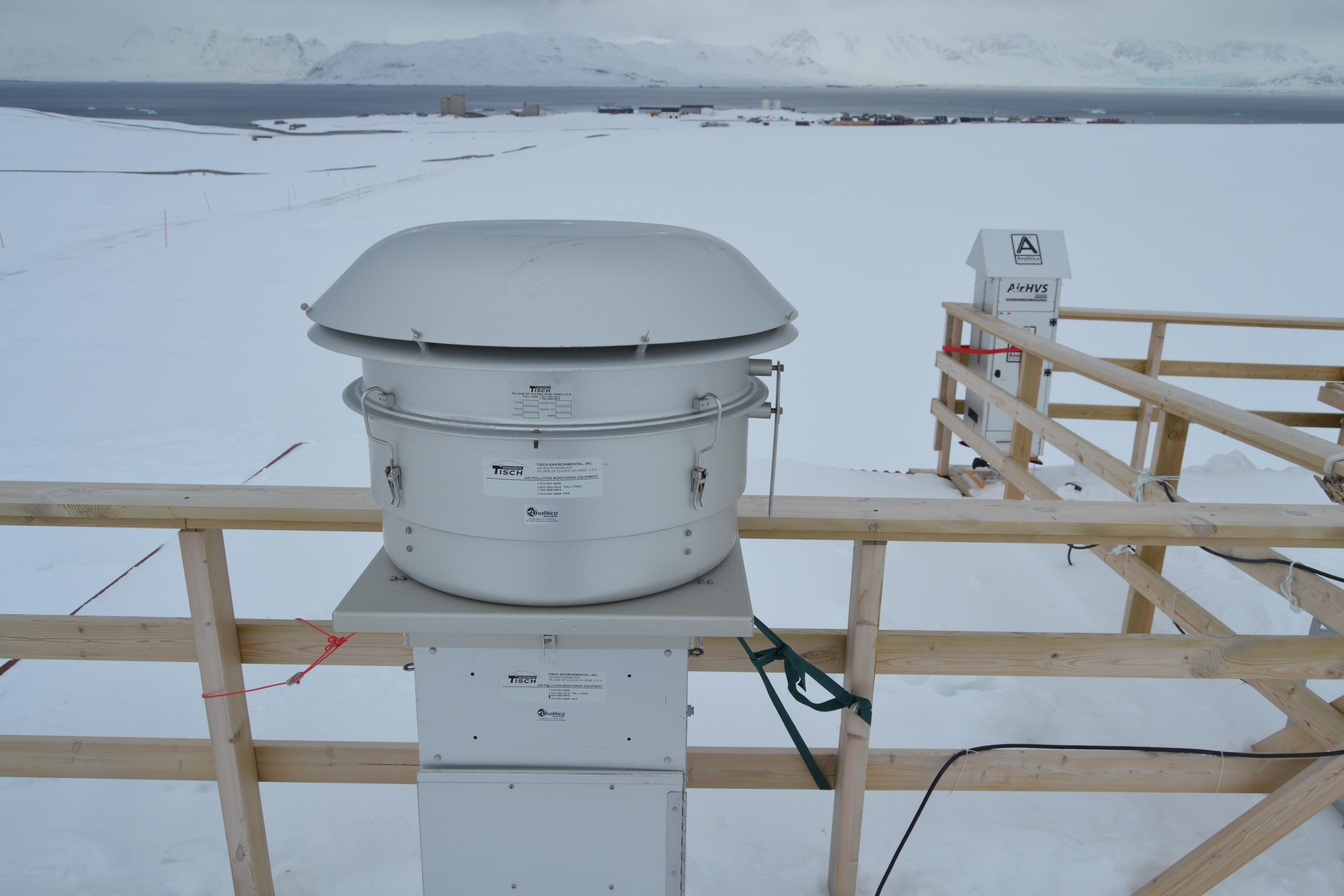
Sampling of PM10 aerosol using a cascade impactor to define the chemical composition in six different size stages. The quartz filters were extracted with ultrapure water and water soluble species were determined: major ions, MSA, carboxylic acids, amino acids, sugars, phenolic compounds, and other organic water-soluble emergening pollutants.
-
Snow water equivalent at the Gruvebadet Snow Resarch Site
-
The dataset includes fourteen seawater surface sampling points taken with Niskin bottles on board the MS-Teisten (Kings Bay)
-
Snow sampling every week near Gruvebadet (Svalbard)
-
Snow sampling every year at the Kongsvegen glacier, in Svalbard
-
Atlantification of Arctic ocean is causing a sharp increase in temperature and salinity around Svalbard Islands and in Kongsfjorden. Such phenomenon and the input of sediment-rich glacial meltwater influence salinity, water column turbidity, and light penetration with ecological implications on the microbial features.
-

The PAGINA (Pan-Arctic GNSS Infrastructure for Atmospheric Science) project addresses the current gap in GNSS observations across the Arctic by developing a unified IT platform for the management and sharing of data acquired through a distributed network of high-rate ground-based GNSS receivers. The project integrates observations collected at sites in Svalbard, Finland, Greenland, and Canada, building on existing Arctic monitoring networks operated by INGV (Istituto Nazionale di Geofisica e Vulcanologia, Italy), UNB (University of New Brunswick, Canada), and FMI (Finnish Meteorological Institute, Finland). The primary objective of PAGINA is to provide a single access point to data from at least 20 stations equipped with high-rate GNSS Ionospheric Scintillation Monitoring Receivers (ISMRs). This infrastructure is designed to support scientific investigations of the polar upper atmosphere, with a particular focus on ionospheric irregularities and space weather-related phenomena.