Insert here free keywords (example: arctic, oceans, etc...)
Type of resources
IADC Research Activities
Topics
Keywords
Contact for the resource
Provided by
Years
Formats
Representation types
Update frequencies
status
Scale
-
Brief narrative summary of the content of the resource(s)
-
Brief narrative summary of the content of the resource(s)
-
Brief narrative summary of the content of the resource(s)
-
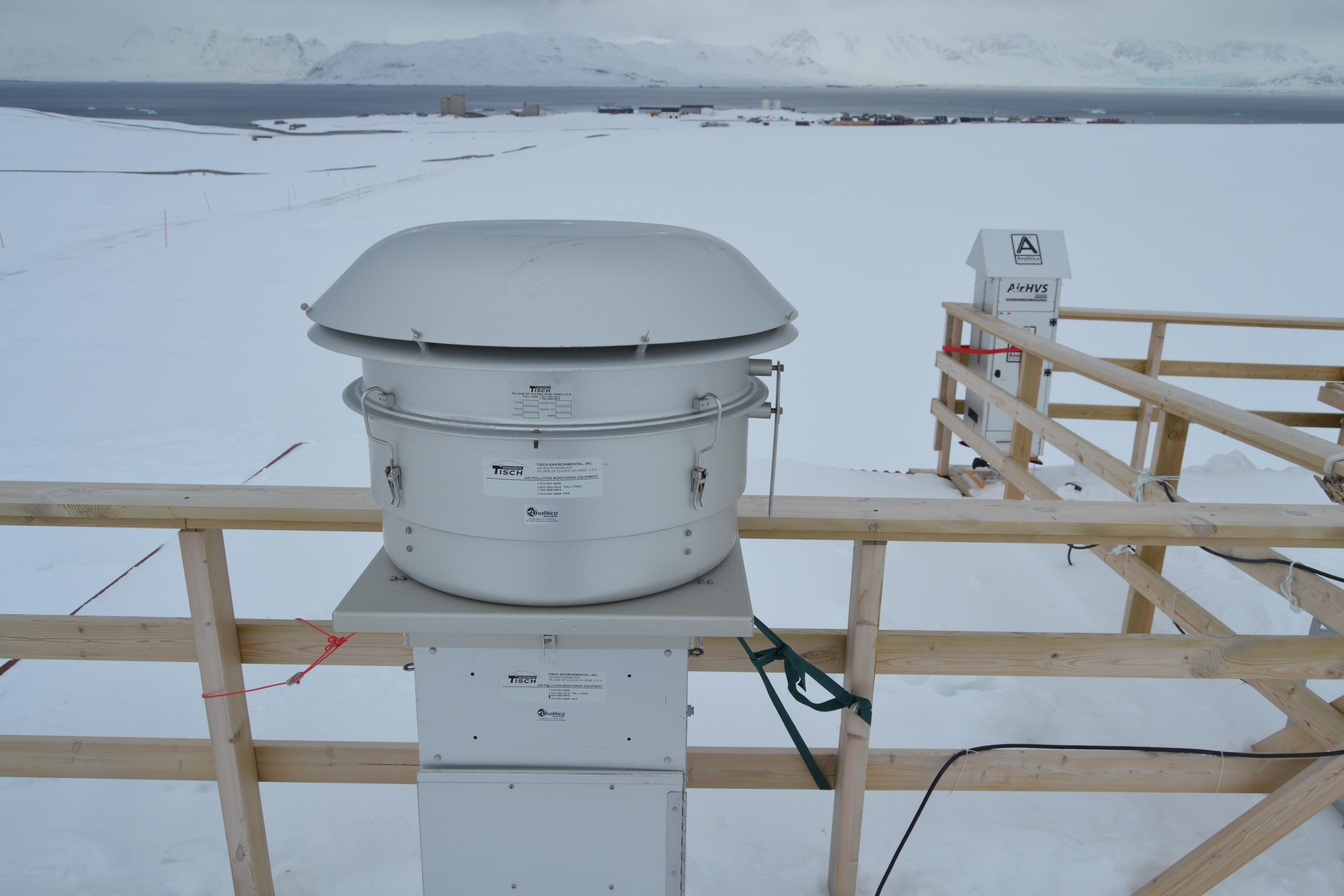
Sampling of PM10 aerosol using a cascade impactor to define the chemical composition in six different size stages. The quartz filters were extracted with ultrapure water and water soluble species were determined: major ions, MSA, carboxylic acids, amino acids, sugars, phenolic compounds, and other organic water-soluble emergening pollutants.
-
Snow water equivalent at the Gruvebadet Snow Resarch Site
-
The dataset includes fourteen seawater surface sampling points taken with Niskin bottles on board the MS-Teisten (Kings Bay)
-
Snow sampling every year at the Kongsvegen glacier, in Svalbard
-
Snow sampling every week near Gruvebadet (Svalbard)
-

Cyclone Sample collection Teams collect two weekly 24-hour samples Teams create metadata by scanning QR codes on cyclone sampler and sample vial with Lifeplan app Teams store samples until shipment in a freezer - Sample shipping to Sweden - Sample cleaning by Lifeplan - Sample shipping to Guelph - Sample sequencing - Transfer of sequencing data to Lifeplan - Bioinformatics - Species lists Through LIFEPLAN, we aim to establish the current state of biodiversity across the globe, and to use our insights for generating accurate predictions of its future state under future scenarios. In LIFEPLAN, we thus characterize biological diversity through a worldwide sampling program, and develop the bioinformatic and statistical approaches needed to make the most out of these data.
-

The PAGINA (Pan-Arctic GNSS Infrastructure for Atmospheric Science) project addresses the current gap in GNSS observations across the Arctic by developing a unified IT platform for the management and sharing of data acquired through a distributed network of high-rate ground-based GNSS receivers. The project integrates observations collected at sites in Svalbard, Finland, Greenland, and Canada, building on existing Arctic monitoring networks operated by INGV (Istituto Nazionale di Geofisica e Vulcanologia, Italy), UNB (University of New Brunswick, Canada), and FMI (Finnish Meteorological Institute, Finland). The primary objective of PAGINA is to provide a single access point to data from at least 20 stations equipped with high-rate GNSS Ionospheric Scintillation Monitoring Receivers (ISMRs). This infrastructure is designed to support scientific investigations of the polar upper atmosphere, with a particular focus on ionospheric irregularities and space weather-related phenomena.